Sanctifying Law
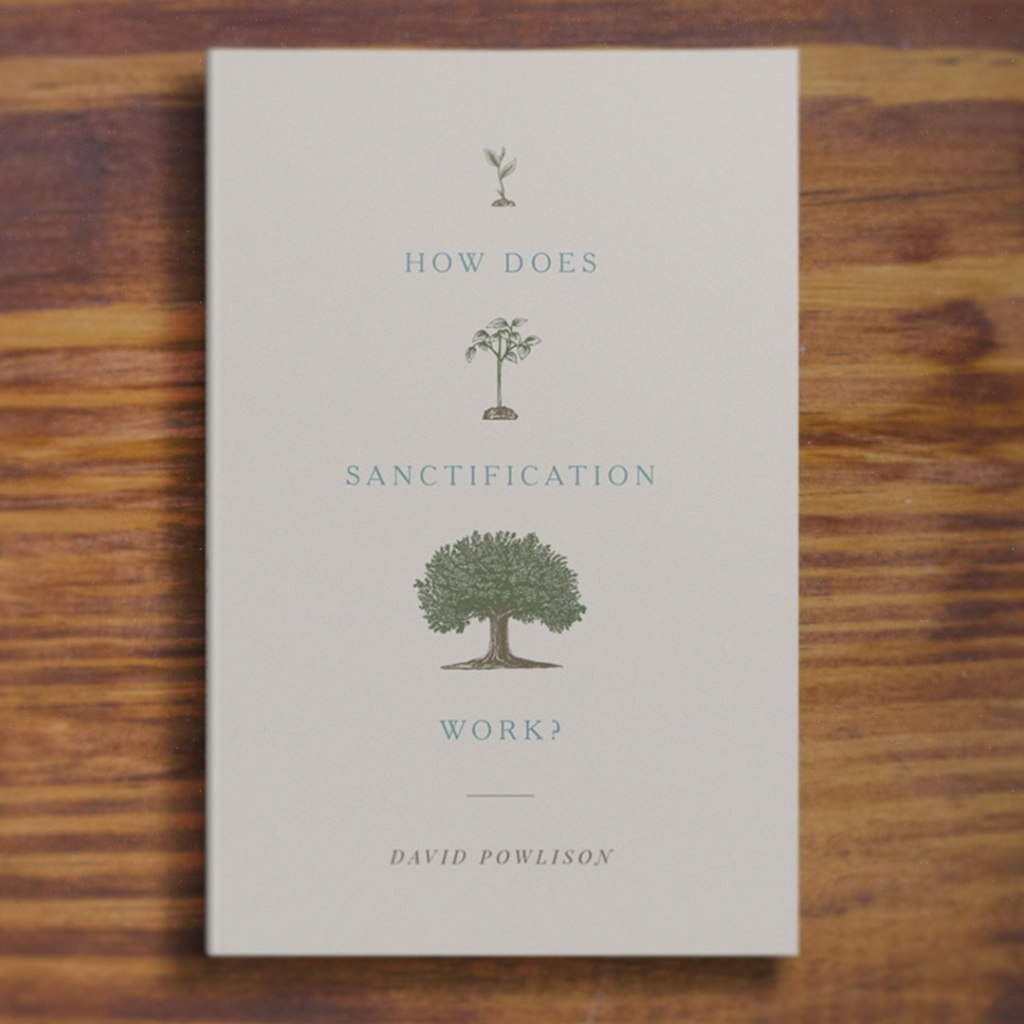
In our bedtime reading (yes, we have bedtime reading together), Bekah and I found this gem in Powlison’s How Does Sanctification Work? (p. 47) touching on what some of the Reformed call the “third use” of the law:
The moral law is not only a standard against which sinners fail, driving us to need our Savior. God is love, and his law reveals both the image in which he created us and the image into which he is recreating us. Law describes loving well. It is not cold, legalistic, threatening, and impersonal. It is warm, humane, desirable, personal. God’s law describes how full humanness operates when walking free. It pictures how wisdom perceives and acts. It casts a vision for what we are becoming under the gentle, firm hand of our Savior’s grace.
In the larger argument of the chapter, Powlison is demonstrating that God sanctifies his people both through “indicatives,” who God is and what he has done to redeem his people, and through “imperatives,” what God commands us to be and to do as his redeemed people. (So the law-gospel dichotomy does not find a proper home in the doctrine of sanctification, since the law itself becomes a means of grace unto holiness for those who received it by faith.)
The Law of Love
I liked especially that Powlison attributed a personal aspect to the law. It fits nicely with what I have recently found in Matthew 23.23, where Jesus says,
Woe to you, scribes and Pharisees, hypocrites! For you tithe mint and dill and cumin, and have neglected the law’s weightier things—justice and mercy and faithfulness. These things one had to do [while] not neglecting the other things.
Here the “weigthier things” highlight a personal aspect in the law as a whole and in all the laws. Jesus selects three commanded virtues that govern interpersonal relationships: administering justice, showing mercy, and remaining faithful. These three virtues are close to the “center of gravity” of God’s law, which Jesus earlier locates in two love-commandments: love God and love one’s neighbor (22.35–39). It is these commandments about the love-relation between persons, then, that give “weight” to justice, mercy, and faithfulness, and that organize all the other commandments and endue them with meaning (v. 40).
God’s Word is full of commandments in part because he has created us with a glorious and holy end in mind. So the law is one of the ways in which God, out of his sheer goodness, brings his Church into his presence and into a perfect likeness to himself.
I presented my analysis of Matt 23.23, very partially, in a conference paper earlier this year; see the abstract here or contact me for a rough draft.

For a dogmatic outline of several (I count five) "uses" of the law, see Francis Turretin, Institutes of Elenctic Theology. 11.22.2, 8–11 (vol. 2, pp. 137–39); see also the [Westminster] Confession of Faith 19.5–7 and the [Westminster] Larger Catechism QQ. 94–97.
An Additional Thought
The popular distinction between “religion” and “relationship” is, to use the technical term, bupkis. If there were such a distinction in biblical revelation, then the commandments would not be able to contribute anything to our sanctification. If there were such a distinction, then James’s description of “religion pure and undefiled” would have nothing to do with either “the one who is God and Father” nor “orphans and widows” (Jas 1.27). But religion does have to do with those things, precisely because God’s law is, among other things, the means by which he teaches us how to love well, as Powlison puts it. And the law itself, because of the work of Christ and the power of the Spirit, is also a means by which God shows his love for us.
Consider what Turretin in Inst. 11.22.11 (vol. 2, p. 140) says of the law:
Before [regeneration and conversion], it was an instrument of the spirit of bondage to throw down and bruise man, but afterwards it becomes the instrument of the Spirit of adoption to promote sanctification. Thus the law leads to Christ and Christ leads us back to the law; it leads to Christ as the redeemer and Christ leads to the law, as the leader and director of life.
Bibliography
- Bower, John R. The Confession of Faith: A Critical Text and Introduction. Principle Documents of the Westminster Assembly. Grand Rapids, MI: Reformation Heritage, 2020. Reformation Heritage.
- ———. The Larger Catechism: A Critical Text and Introduction. Principle Documents of the Westminster Assembly. Grand Rapids, MI: Reformation Heritage, 2010. WTSBooks.
- Powlison, David. How Does Sanctification Work? Wheaton, IL: Crossway, 2017. WTSBooks.
- Turretin, Francis. Institutes of Elenctic Theology. 3 vols. Edited by James T. Dennison Jr. Translated by George Musgrave Giger. Phillipsburg, NJ: Presbyterian and Reformed, 1992–1997. WTSBooks.
 Mohr Perspectives
Leave a comment