Turretin, a Scripture Index, and a Novice in Historical Theology
Francis Turretin (François Turrettini/Franciscus Turretinus, 1623–1687) was a rare jewel of a theologian: theologically precise, exegetically minded, a master of sources, even witty from time to time.
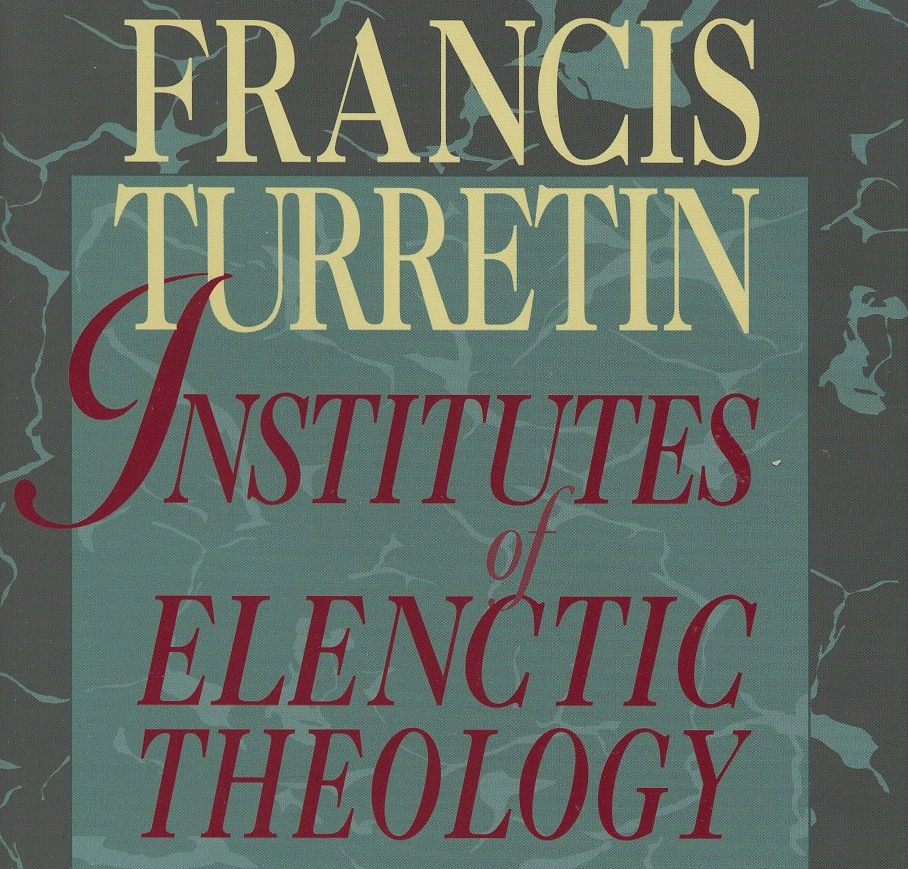
I first encountered Turretin when I had to speed-read portions of his Institutes of Elenctic Theology (see bibliography below) for a peculiarly backward course. Needless to say, I didn’t meet him on favorable terms, didn’t learn anything from him at first, and didn’t like his style of presentation because it was harder to speed-read than most texts.
But since then, I have had a few occasions to sit with the Institutes and thumb through some of Turretin’s arguments at a slower pace. What brilliance! And one thing that I have come to learn is that, for a dogmatician, he spends considerable space on exegesis. (This point was brought to my attention by one of my mentors, Brandon Crowe, who often engages with Turretin in an attempt to cross the divide between “biblical studies” and “theological studies” in academia and academic publishing. Crowe’s Hope of Israel is an excellent example.) Because the “elenctic” method targets doctrinal error arising from poor exegesis, Turretin spends more time than most dogmaticians on extended discussions of what passages in the Bible do and do not mean, of what constitutes an acceptable interpretation, of how bad reading yields bad theology and vice versa.
Now, I do not consider myself an expert on Turretin. I don’t know whether there are any experts on Turretin anymore. But I do know how to use a Scripture index—and the one for Turretin’s Institutes has a lot of entries! The point I’m coming to through this longwinded introduction is that I recommend a scan of the Institutes’ Scripture index to anyone who is looking for a Reformed orthodox treatment of a particular passage.
I recently did some digging as I prepare for some writing, including a sermon, on Psalm 90.
Psalm 90 in Turretin’s Institutes
I found seven instances (on eight pages) in which Turretin deals with Psalm 90 in some way.
1. Psalm 90.1–2
In Inst. 3.10, Turretin is affirming, against the Socinians, that the eternity of God excludes succession in time; God not only has no beginning and no end, but he also has no duration through time as it is experienced by creatures. While mountains and hills can be called “ancient” and “everlasting” in the sense of continuing for time incalculable by humans (e..g, Deut 33.15), God is everlasting not only in that sense. His eternity is beyond the reckoning of time altogether (Inst. 3.10.1–2 [vol. 1, p. 202]). In this context, Psalm 90.1–2 is cited as a text that directly straightforwardly ascribes the attribute of eternity to God (Inst. 3.10.3 [vol. 1, p. 202]).
Here is nothing surprising. Sometimes Scripture does a dogmatician’s work for him. The opening of Ps 90 clearly ascribes the attribute of eternity to God. But in Turretin’s mind, Ps 90 has more to say than simply asserting God’s eternity (see #3 and #4 below).
2. Psalm 90.2 (A)
Turretin uses Ps 90.2 (as well as Deut 32.18, from another song attributed to Moses!) to argue that חול (i.e., חיל) means “beget” or “bring forth,” not “create,” in Prov 8.24 (Inst. 3.29.12 [vol.1, pp. 296–97]).
Again, here is nothing surprising. As a larger exegetical argument with respect to Prov 8.24, Turretin ushers in other texts that use the same Hebrew word in order to clarify the word’s sense. That procedure is standard practice for scholars of his day and ours.
3. Psalm 90.2 (B)
In Inst. 5.3, Turretin denies that the world has always existed or could have always existed in the past. In his arguments against the actual past-eternity of the world, he cites Ps 90.2 (along with Prov 8.22–23; Eph 1.4; Matt 25.34; 2 Tim 1.9).
While it may seem like just another case of prooftexting, there is a deeper level of sophistication here. In the passages cited, God’s eternity is juxtaposed with created world in some way (Inst. 5.3.4 [vol.1, p. 437]). Turretin highlights not only that Ps 90.2 says that the world was created (it does say that) but also that it contrasts its coming into being of the world to God’s eternity. Sensitivity to this point brings the question of the world’s past-eternity to a sharper theological point: there is only one being that is eternal, properly speaking, only one being that always has been—God (see #4 below).
4. Psalm 90.2 (C)
In Inst. 7.1, Turretin examines whether and when the angels were created. As the second point in his argument that angels were not created before the “beginning” of Gen 1.1, Turretin says,
Whatever was before the world is God because this prerogative is claimed for him in Scripture (Ps. 90:2; Prov. 8:22; Jn. 1:1).
Inst. 7.1.8 (vol. 1, p. 540)
In other words, because texts like Ps 90.2 use God’s existence prior to the creation of the world as a proof of his sole deity, we can infer that nothing else can make such a claim about itself, not even angels. There seems to be an elliptical reductio ad absurdum here: if angels were before the foundation of the world, then angels, too, would be God.
His argument rests on an understanding of the verse in its context….
At this point, I think that Turretin begins to shine. He is not using Ps 90.2 as a mere prooftext for God’s eternity or a mere prooftext for the creation of angels and denial of angelic past-eternity. His argument rests on an understanding of the verse in its context: the verse is about God’s uniqueness over against all creation with respect to time. So Ps 90.2 not only ascribes eternity to God but it ascribes it to him alone.
5. Psalm 90.4 (A)
In Inst. 3.10, Turretin is affirming, against the Socinians, that the eternity of God excludes succession in time (see #1 above). Turretin clarifies the meaning of Ps 90.4:
When a thousand years are said to be in the sight of God as one day (Ps. 90:4), it refers not only to estimation (that God considers a thousand years as no more than one day), but also as to the comparison of our duration (which is ephemeral) with the divine (which is eternal). It intimates that God is not to be measured by our rule, as if his promise could be retarded, even if in our judgment fulfilled too late. For God is not subject to any differences of time, but a thousand years in his sight are as one day.
Inst. 3.10.12 (vol. 1, p. 204)
Turretin again shows a sensitivity to a verse in its context. Overall, Psalm 90 contrasts the eternity of God (vv. 1–2) with the finiteness of sinful, mortal humankind (vv. 3, 5–11). It is from the context that Turretin can affirm that Ps 90.4 is not only about God’s estimation but also about an explicit comparison (an incomparability) between how God and humankind relate to time.
6. Psalm 90.4 (B)
In Inst. 12.4, Turretin is dealing with the question of the end of the world. He denies that we can hold things “certain and determinate” about the timing of the end of the world, but he affirms that there are signs that precede the time of the end (p. 583). He notes how some have used Ps 90.4, along with 1 Pet 3.8, to argue from the six days of creation to six millennia of the world, the seventh corresponding to God’s seventh-day Sabbath. In response, after surveying the history of this interpretation through early-Christian, rabbinic, and medieval sources he says,
This conjecture is merely Talmudic, having no foundation in the Scriptures. Nor was it the object of Moses or of Peter in the adduced passages to compare the six days of creation with the duration of the world, but to teach that with God spaces of time are not to be measured by the same moments as with men. For to him (placed beyond all succession of time [see ##1–5 above]) all things are absolutely present in the most simple ‘now.’
Inst. 20.4.6 (vol. 3, p. 585)
Turretin is here countering a (still popular) kind of biblicism that uses verses like Ps 90.4 like a decoder ring for the mysteries of the Scriptures. Again, Turretin is sensitive to human-authorial intention for a verse in its context. Moses and Peter were saying something about God and his relation to time; they were not saying something about time by itself.
7. Psalm 90.10
In Inst. 4.5, Turretin affirms, against the Socinians and Remonstrants, that the end of each person’s life is “determined by the decree of God” (vol. 1, p. 322). He deals with the interpretation of several biblical sources, and then turns to Ps 90.10:
When Moses says, “The days of our years are seventy and eighty years” (Ps. 90:10), he does not speak of the special term of life assigned to each individual, but both of the general term (to which the life of the Israelites of his time had been reduced whose bodies fell in the wilderness, and indeed as to a great part within that term of seventy or eighty years) and of the common term posited for the life of men (which for the most part falls within that term, those surviving being few and far between).
Inst. 4.5.26 (vol. 1, p. 328)
Noteworthy here is Turretin’s willingness to say, “This is not a prooftext for my point, even if you thought it should be.” Turretin holds that God determines the number of days that every individual lives, but Turretin has to look elsewhere in Scripture to demonstrate it; that point is just not what Ps 90.10 is about.
Food for the Thinkings
If anything, I hope this excursion into my notes on Psalm 90 encourages you to take a look at Turretin as someone who crosses the artificial boundary between hermeneutics and dogmatics, between biblical studies and theological studies. There is a wealth of careful thought in the Institutes that is largely neglected even by Reformed pastors and theologians who are closely allied to Turretin theologically.
Bibliography
- Crowe, Brandon D. The Hope of Israel: The Resurrection of Christ in the Acts of the Apostles. Grand Rapids, MI: Baker Academic, 2020. WTSBooks
- Turretin, Francis. Institutes of Elenctic Theology. 3 vols. Edited by James T. Dennison Jr. Translated by George Musgrave Giger. Phillipsburg, NJ: Presbyterian and Reformed, 1992–1997. WTSBooks

 Mohr Perspectives
Leave a comment