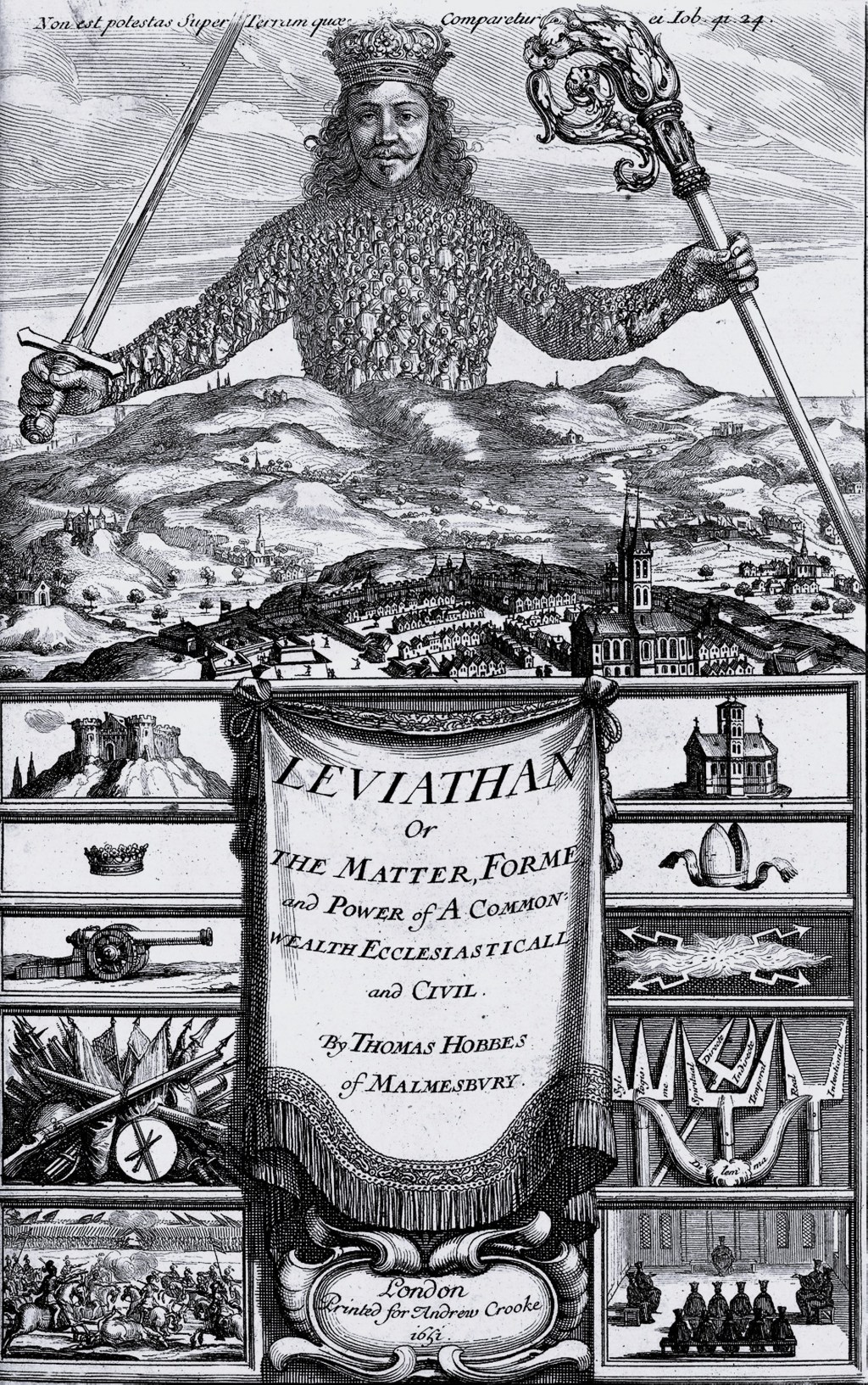
I announced last month that I had two proposals accepted for the Society of Biblical Literature’s Annual Meeting this coming November: one on Tertullian’s use of the “chair of Moses” saying (Matt 23.2–3) and one on Hobbes’s use of the same saying. If you’ve been following along, you know that these presentations are both connected to my in-progress dissertation on the use and effects of the “chair of Moses” saying through history.
Over the last two months, I submitted the core of two chapters of my dissertation: one on ecclesial concerns arising from the “chair of Moses” saying, focusing on Origen and Tertullian; and another on salvation-historical concerns, which also includes Origen and Tertullian but puts the spotlight on Irenaeus and Hilary. I’m going to let those sit for a bit. Now I’m going to turn my attention to the core figures in the next chapter on political and jurisprudential concerns: Hugo Grotius and Thomas Hobbes.
As much as I am fascinated by Grotius, so far I like Hobbes better. Don’t get me wrong: I disagree with both Grotius and Hobbes on many major headings of theology, but they have been among my best teachers in this project (along with Theodore Beza and David Pareus). These were the first to prompt me to consider more deeply the role of cultural context in the interpretation of Scripture and of personal motivation in the use of Scripture.
The raw material for Grotius’s contribution to the chapter is found in an article recently published in JEMC. I’m still working on the raw material from Hobbes’s Leviathan and Behemoth. But I’ll give a sneak peak into this month’s work. Below is a drafted introduction for the SBL proposal on Hobbes. (Unlike many, I draft my introductions first as a kind of warm-up and outlining exercise, and then I go back and re-write them at the end of the process.)
“On the chair of Moses sit the scribes and the Pharisees; therefore, do and keep all whatsoever they might tell you, but do not do [anything] according to their works, for they say but do not do” (Matt 23:2–3).
Throughout this paper, I refer to these verses from the Gospel according to Matthew, spoken by Jesus “to the crowds and to his disciples” (v. 1), by the shorthand term the “chair of Moses” saying. I was honored last year to present for this same program unit on the way that German-Christian Aryan-Jesus ideology in the early twentieth century used and in many cases suppressed the “chair of Moses” saying. This year’s paper is connected that previous one, but now we will be delving not into German source criticism but into early modern polemics—much more fun, I think. I’d like to put forth Thomas Hobbes as a novel interpreter of the “chair of Moses” saying, which he deploys several times in Leviathan, his most famous work, and again in the less famous, posthumously published dialogue titled Behemoth. I’ll focus on Leviathan, which is more influential and contains more elaborate articulation of Hobbes’s understanding of the “chair of Moses” saying (though I can say a little about Behemoth in the question period afterward if there’s interest).
As outlined on the handout, this paper titled “The Scribes and Pharisees as the Civil Sovereigns of Israel according to Hobbes’s Leviathan” has five section following this introductory section: the next section will very briefly give some historical context for Hobbes and his Leviathan; section 3 will examine the instances in which the “chair of Moses” saying appears in Leviathan; section 4 will take wider look at Hobbes’s understanding of Mosaic authority and show how it plays a part in his attempt to destroy the Roman Catholic conception of ecclesiastical sovereignty as something distinct from or even superior to civil sovereignty; and section 5 will examine whether or not I was accurate when I just said that Hobbes is a “novel interpreter” of this saying. Then I’ll summarize my findings in the last section.
Anyway, I hope at some point in this paper that I will get to put John Calvin and Thomas Hobbes in the same sentence!

 Mohr Perspectives
Leave a reply to Hobbes Section/Presentation Drafted! – Mohr Perspectives Cancel reply